
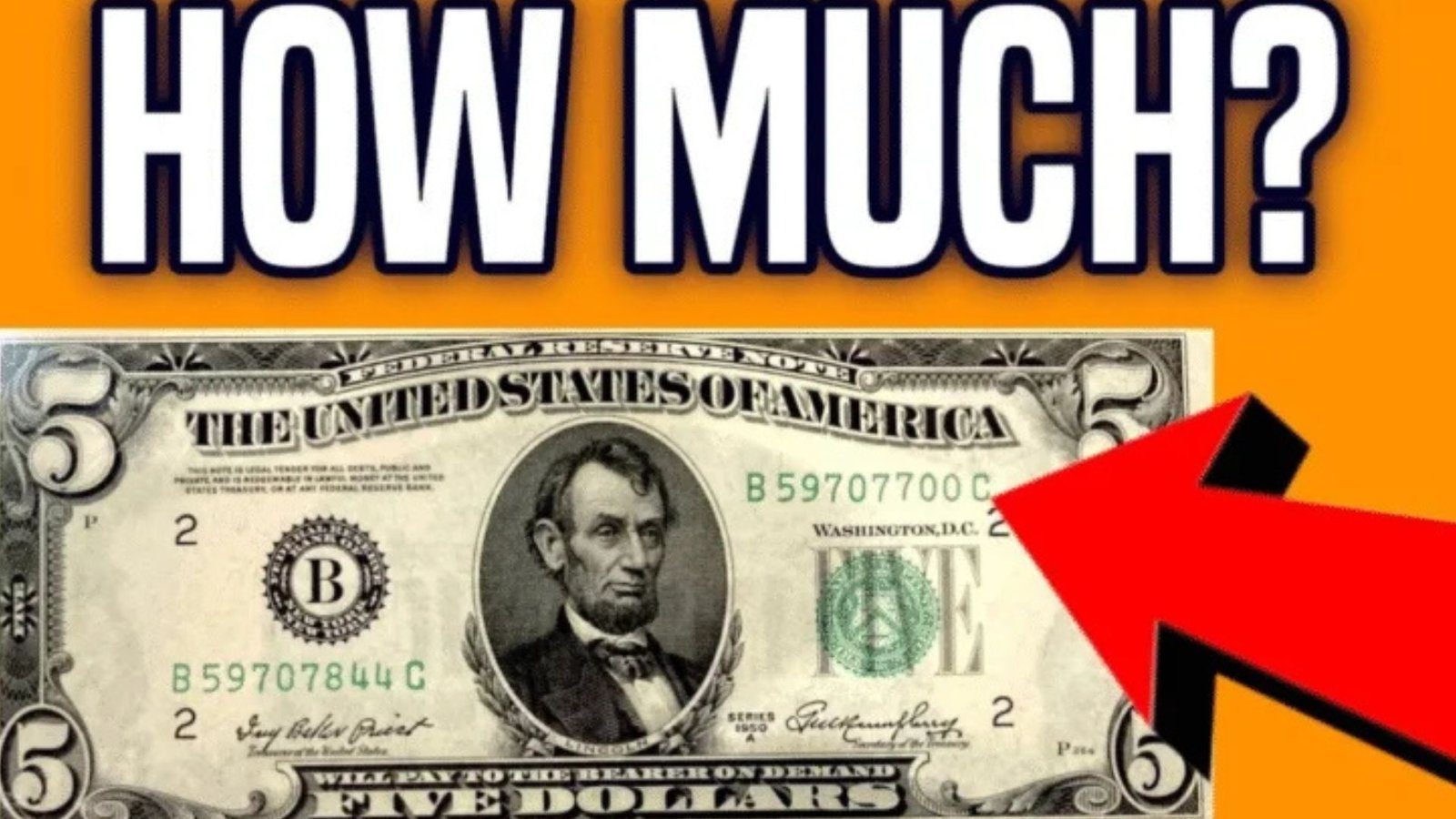
Ever pulled out a $5 bill from your pocket and wondered if it’s just pocket change or something special? If you’re holding a 1995 series U.S. $5 bill with an upside-down Treasury seal on the front, you might be sitting on a collector’s gem worth way more than face value. These bills, printed by the U.S. Bureau of Engraving and Printing, are rare printing errors from the mid-1990s, turning ordinary money into sought-after items for hobbyists and investors.
Discovered by chance in everyday circulation, they can fetch hundreds or even thousands at auctions, making them a fun hunt for anyone with spare cash. In this easy guide, we’ll walk you through how to spot one, its backstory, why it’s valuable, and tips to cash in—all in simple words. Whether you’re a coin buff or just curious about your wallet’s contents, let’s turn your loose change into potential profit.
The Story Behind the Upside-Down Seal Error on 1995 $5 Bills

Back in the 1990s, the U.S. Treasury was modernizing its currency printing, but glitches happened. The 1995 $5 bill features Abraham Lincoln on the front and the Lincoln Memorial on the back, with intricate designs to fight counterfeiting. One rare mistake? The Treasury seal—a black eagle emblem on the right side—ended up rotated 180 degrees, looking upside-down when held normally.
This error slipped through during production at the Bureau of Engraving and Printing’s facilities in Washington, D.C., or Fort Worth, Texas. Only a handful were released into circulation, making them super scarce. Spotting one isn’t about luck—it’s about knowing what to look for. These bills aren’t fake; they’re genuine errors, adding to their appeal for collectors who love quirky history. If yours has this flaw, it’s not just paper—it’s a piece of minting mishap worth sharing or selling.
How to Identify a 1995 $5 Bill with the Upside-Down Seal
Spotting this rarity is straightforward if you know the signs. Pull out your $5 bill and follow these steps—no fancy tools needed, just good light and a steady hand.
Step-by-Step Identification Guide
- Check the Series Year: Look at the bottom of the portrait (Lincoln’s face). It should say “Series 1995” in small print. If it’s a different year, like 2000 or later, it’s not the one.
- Examine the Treasury Seal: On the front right side, find the black circular seal with an eagle, shield, and stars. Hold the bill horizontally— the eagle’s head should point right, wings spread evenly. If the whole seal is flipped (eagle head left, stars below), that’s the error.
- Verify the Serial Number: Look for a number like “B 12345678 A” in green ink on both ends. For 1995 errors, common prefixes are B, C, D, or E from the Washington facility. No specific number pattern, but match it with known examples online.
- Inspect the Condition: Crisp bills without folds, tears, or marks are worth more. Use a magnifying glass if needed to confirm the flip isn’t a shadow.
- Compare to Normal Bills: Grab a standard 1995 $5 for side-by-side—the seal should match orientation with the portrait.

If it checks out, congrats—you’ve got a keeper. These errors are estimated at fewer than 100 known examples, making yours a true find.
Quick Identification Checklist Table
Use this table to double-check your bill—yes to all? It could be valuable.
| Check Item | What to Look For | Pass If… |
|---|---|---|
| Series Year | “Series 1995” at portrait bottom | Matches exactly—no other years |
| Treasury Seal Position | Black circle on front right | Seal is fully upside-down (180 degrees) |
| Eagle Orientation | Head should point right on normal bills | Head points left, wings flipped |
| Serial Number Prefix | B, C, D, or E (Washington print) | Starts with one of these letters |
| Bill Condition | Crisp, no damage | Clean and unfolded for top value |
This table makes spotting easy—print it for wallet hunts.
Why Is the 1995 Upside-Down Seal $5 Bill So Valuable?

What makes this bill a treasure? Rarity and collector demand. Normal $5 bills are worth $5, but errors like this flip the script. Known as “upside-down Treasury seal varieties,” they emerged from printing glitches when plates misaligned during production.
History and Rarity
In 1995, the U.S. was updating security features, but human or machine errors let a few flawed sheets escape quality control. Only about 64 known upside-down seal $5s from that year exist, per the Professional Currency Dealers Association. Early finds were in circulation, spotted by sharp-eyed cashiers or bank tellers in the late 1990s. Today, they’re graded by services like PCGS or PMG on a 1-70 scale—higher scores mean higher prices.
Value starts at $500 for poor condition but soars to $10,000+ for gems in top shape. Auction records show one sold for $15,200 in 2022 at Heritage Auctions. Why the premium? Collectors love “errors” as windows into mint history, and low supply drives demand. If yours is uncirculated (fresh from the printer), it could fetch thousands—get it appraised to know.
Value Breakdown Table
Based on market data—prices fluctuate, so check current auctions.
| Condition Grade | Estimated Value Range | Examples of Sales |
|---|---|---|
| Poor (Circulated, Worn) | $500–$1,500 | eBay sales for everyday finds |
| Very Good (Light Wear) | $1,500–$3,000 | Mid-range collector buys |
| Fine to Very Fine | $3,000–$6,000 | Graded by PMG, auction starters |
| Extremely Fine (Near Crisp) | $6,000–$10,000 | Heritage Auctions mid-tier |
| Gem Uncirculated (Perfect) | $10,000–$15,000+ | Top sales for pristine examples |
Grades from PCGS/PMG boost credibility—submit yours for certification.
How to Cash In on Your Rare $5 Bill: Selling Tips
Found one? Don’t spend it—it’s worth more intact. Here’s how to turn it into profit.
Selling Steps
- Authenticate It: Take to a local coin shop or mail to PCGS/PMG for grading ($20-50 fee). This proves it’s real and sets value.
- Research Market: Check eBay, Heritage Auctions, or Stack’s Bowers for recent sales—aim for 10% above comps.
- Choose Your Path: Sell privately (Facebook groups) for quick cash, or auction for max price (10-20% fees).
- Protect It: Store in a holder away from light/humidity—value drops if damaged.
- Taxes Note: Profits over $600 are taxable—keep records for IRS.
Pro tip: Join forums like CoinTalk for advice—network with buyers.
Common Mistakes and Preservation Tips
Mistake: Folding or marking the bill—kills value. Tip: Handle by edges. Another: Selling too fast without grading—misses top dollar. Preserve in acid-free sleeves; avoid sunlight.
Conclusion
The 1995 $5 bill with an upside-down Treasury seal is a wallet wonder, turning pocket change into potential profit through rarity and collector love. By checking the series year, flipping the seal, verifying serials, and grading condition, you can spot this error and cash in from $500 to $15,000+ at auctions. It’s a fun reminder that history hides in everyday cash—grab your bills, follow the steps, and consult experts like PCGS for the real worth. Whether keeping it as a story or selling for gains, this find adds excitement to your money. Hunt smart, preserve well, and who knows—your next $5 could be a fortune. Share this guide to spark a friend’s treasure search!